Field and check-in
The schedule meets the field every morning.
A super knows how many days are left on the pour. Nobody knows what 62% means. Brikt asks the field for the number it actually has, and derives everything else from it.
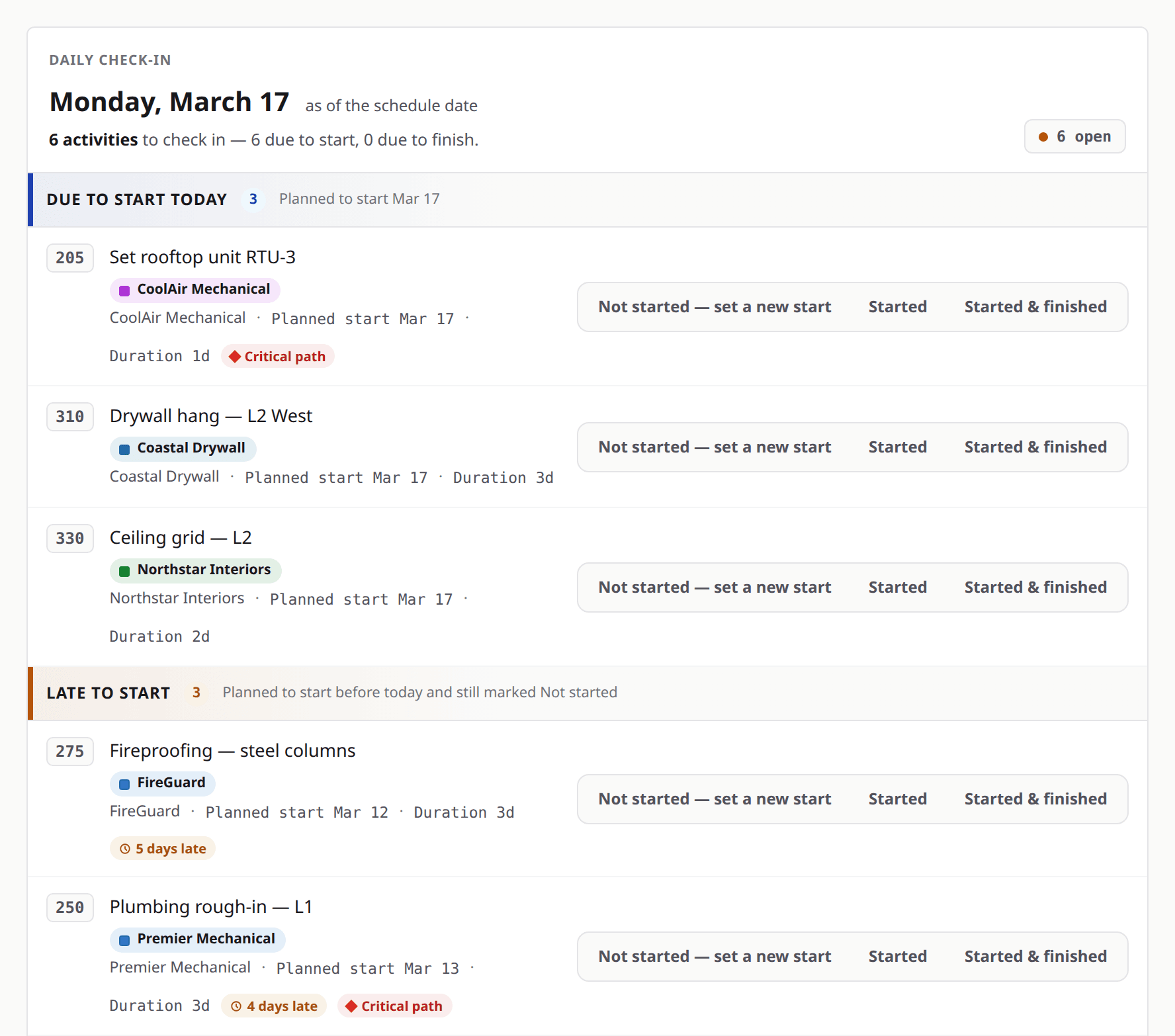
Daily check-in
Daily check-ins your superintendent finishes in a minute.
What was supposed to start as of the schedule date — and did it? Then the same question for the work already going: what was due to finish, what is overdue to finish, and what is still running. Your superintendent gets through it in under a minute, with no schedule training.
One answer at a time
Each row takes one choice, and work already running also takes how many working days are left on it. Every answer lands on its own, so a check-in interrupted by a delivery is half done rather than lost.
The catch-up band
Miss a morning and the days you skipped are carried forward for you to answer, rather than quietly disappearing behind today's list.
It reaches the schedule
An answer is a real progress write against a real CPM model. The forecast reflects it that morning, not when somebody gets round to updating the file.
Honest progress
Days left is the number. Percent is the derivation.
Ask a foreman what percent complete the slab is and the answer depends on which basis he has in mind — time elapsed, quantity placed, or how the work looks. Ask how many more days he needs on it and you get the current field estimate in the units the forecast already uses.
So that is what Brikt asks for. Your field reports the days left; percent complete is worked out from it, for the people who still want to see one. It only ever runs in that direction, which is why the forecast is still worth reading in month four.
Blockers
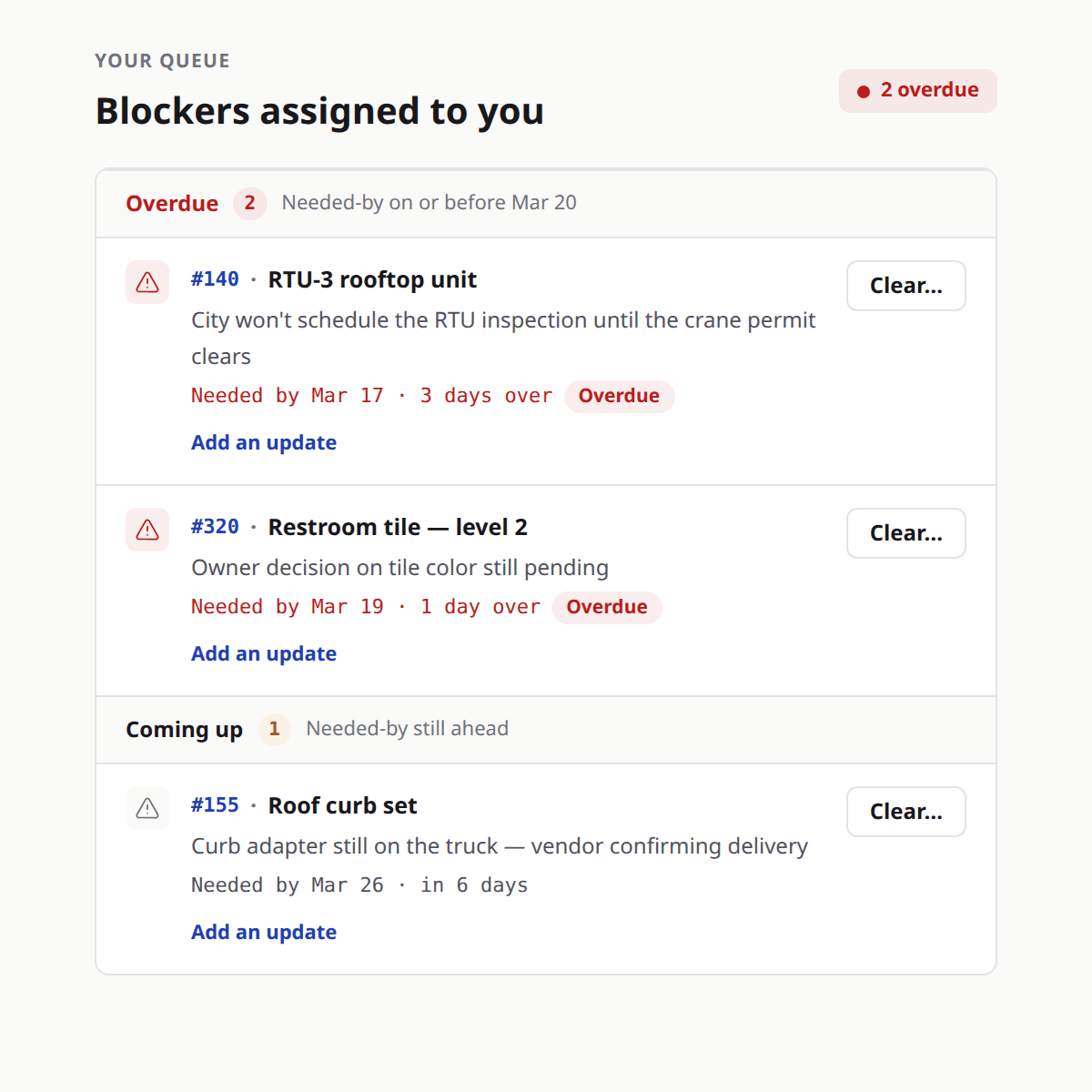
Raise a blocker where the lateness is realised.
The moment the check-in tells you something did not start is the moment somebody knows why. So that is where you say it — the blocker is raised from the check-in itself, against the schedule anchor it is late to.
Brikt validates that anchor rather than trusting what was typed, so a blocker cannot quietly point at the wrong date. And it never moves a date on its own: a blocker becomes a record — what is blocked, whose it is, and the date it is needed by — which is what you will want three months from now.
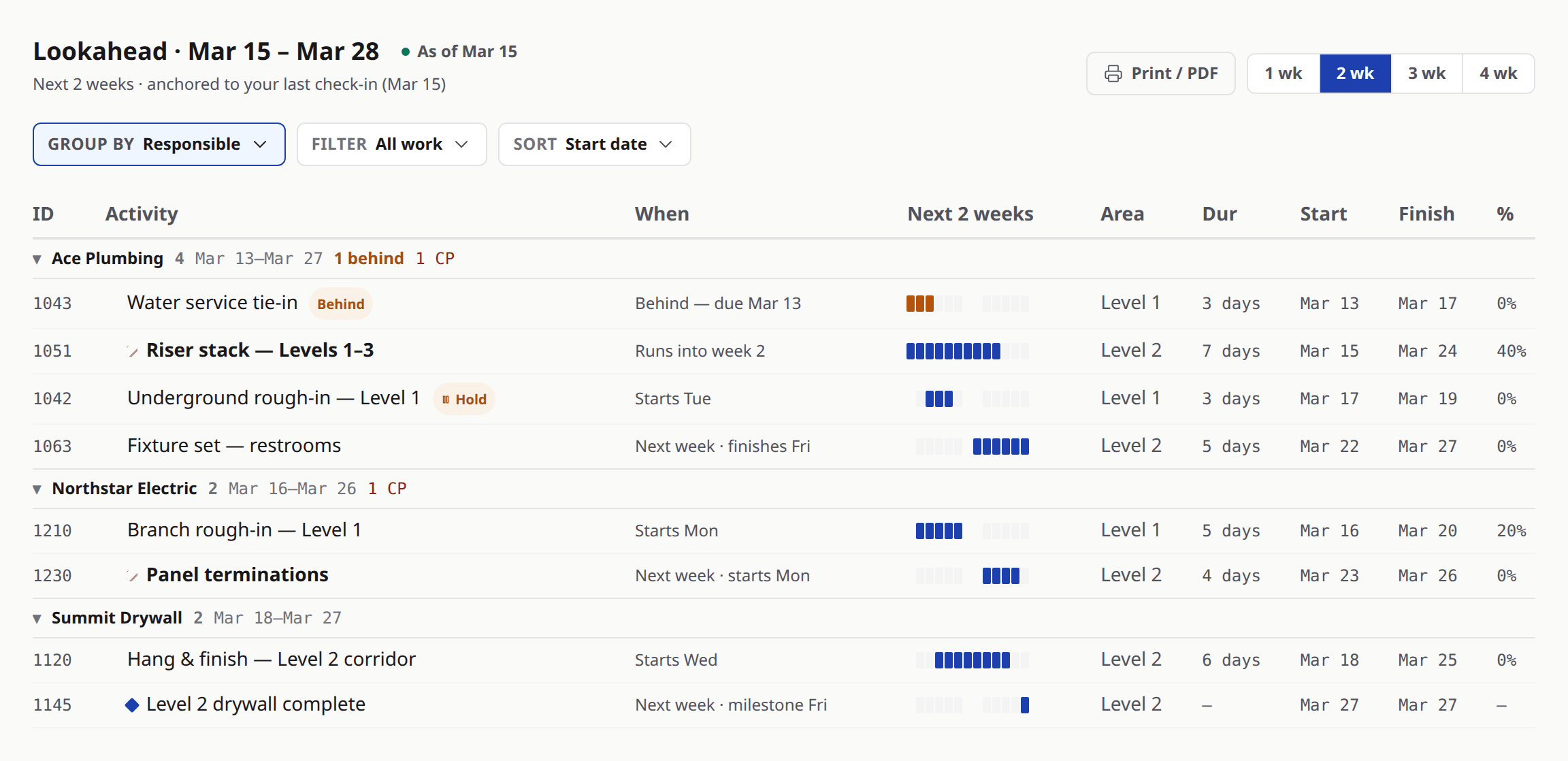
Look-ahead
A look-ahead the trades will actually read.
One to four weeks, grouped by whoever is responsible for the work. The window lives in the URL, so the view you are looking at is the view you send — and it prints to PDF when paper is what the trailer wants.
Invited collaborators work from the real schedule — dates, float, the critical path — while your costs, internal notes, and baseline comparisons stay yours.
Put it in front of a superintendent.
The check-in is the part that has to survive a real morning. Bring one and we will run it on your job.